
IIMs Courses
India's MBA Discovery
Where Leadership Is Forged Through Responsibility.
Where Leadership Is Forged Through Responsibility.
Leadership is easy to admire from a distance. People celebrate successful outcomes. They applaud confident decisions. They admire resilience and discipline. But very few understand what leadership truly looks like when the stakes are extraordinarily high.
What does leadership mean when hundreds of lives depend on preparation? How do people make decisions with incomplete information? How do teams remain composed in situations where uncertainty is constant? How do organizations continue functioning during crises? How do leaders inspire confidence when fear and pressure threaten performance?
For generations, defence institutions around the world have answered these questions. Long before leadership became a corporate buzzword, military organizations were developing systems designed to prepare individuals for responsibility, uncertainty, and service.
The Post Graduate Programme in Defence Management brings these timeless leadership lessons into contemporary management education. It combines strategic thinking, operational excellence, crisis preparedness, resource management, and organizational leadership to develop professionals capable of thriving in demanding environments.
This programme is not only for military personnel. It is equally relevant for veterans transitioning into civilian careers, government officials, public administrators, consultants, risk professionals, and individuals seeking to strengthen their strategic leadership capabilities.
Because some careers are built around ambition. Others are built around responsibility. Defence Management belongs firmly to the latter.
Defence Management sits at the intersection of management education and strategic leadership. Unlike conventional MBA programmes that primarily focus on commercial organizations, this specialization explores environments where preparation, execution, and resilience directly influence outcomes of national importance.
Participants learn how defence ecosystems function. They examine how strategic decisions are developed. They understand how logistics support readiness. They evaluate procurement systems. They explore crisis leadership. They investigate how emerging technologies influence modern defence environments.
The programme also examines the human side of leadership. How do people maintain morale under stress? How do teams sustain performance over prolonged periods? How do organizations build cultures of accountability? How can leaders communicate effectively during crises?
These questions extend well beyond military environments. Modern corporations increasingly face disruption. Cyber threats continue evolving. Global supply chains experience uncertainty. Economic conditions fluctuate. Organizations therefore seek leaders capable of remaining effective when circumstances become unpredictable.
The leadership principles explored within Defence Management are highly transferable. That is precisely why this specialization continues gaining relevance. It prepares individuals not merely to manage operations.
It prepares them to lead through uncertainty.
The world has become increasingly interconnected and unpredictable. Challenges emerge rapidly. Organizations must adapt continuously. Traditional approaches to leadership are no longer sufficient. Defence Management addresses these realities directly.
The curriculum blends management principles with defence perspectives. Students develop both conceptual understanding and practical capability. The learning experience emphasizes application rather than memorization. Participants are encouraged to challenge assumptions, evaluate alternatives, debate ideas, and strengthen judgement.
Students generally study:
These subjects establish strong managerial foundations.
Specialized modules may include:
These subjects help participants understand the broader strategic context within which defence organizations operate.
Defence leadership cannot be developed solely through lectures. Participants engage through:
These experiences strengthen both confidence and competence. Participants frequently describe this practical orientation as one of the programme's greatest strengths.
Depending on programme design, students may gain exposure through projects involving:
These experiences bridge theory with real-world application.
Admission requirements vary depending on programme format. However, most institutions seek candidates demonstrating maturity, leadership potential, and intellectual curiosity.
| Criteria | Requirement |
|---|---|
| Educational Qualification | Applicants should possess a recognized bachelor's degree. General category candidates generally require a minimum of 50% aggregate marks. Reserved categories receive applicable relaxations. |
| Professional Experience | Many programmes prefer candidates with professional experience, particularly serving military personnel, veterans, government officials, senior executives, and public sector professionals. However, eligibility may vary across institutes. |
| Entrance Requirements | Selection may consider CAT Scores, institute-specific assessments, professional achievements, sponsored nominations, leadership experience, and interview performance. |
Institutes often evaluate candidates on the basis of:
They seek individuals capable of contributing meaningfully to peer learning environments.
Recognized for executive education excellence and leadership development.
Known for comprehensive management education.
Offers contemporary approaches to leadership learning.
Emerging as a destination for public leadership programmes.
Emphasizes ethical and responsible leadership.
Students often compare these ecosystems based on programme flexibility, peer profiles, faculty expertise, and long-term career aspirations.
One of the most fascinating aspects of Defence Management is that it prepares individuals for careers far beyond conventional expectations. Many prospective students assume the programme is designed exclusively for serving military officers. Others believe its relevance ends within defence establishments. The truth is remarkably different.
The principles taught through Defence Management have become increasingly valuable across the modern economy. Today's organizations operate in environments defined by volatility. Supply chains experience disruptions. Cyber threats evolve continuously. Geopolitical developments reshape industries. Stakeholder expectations shift rapidly. Businesses face reputational risks that can escalate overnight.
In such circumstances, organizations seek leaders who can remain composed, think strategically, and execute decisively. This is precisely where Defence Management graduates distinguish themselves.
For many graduates, the programme becomes a bridge. For some, it strengthens existing careers within defence ecosystems. For others, it opens entirely new civilian opportunities. Regardless of the destination, one outcome remains consistent. Participants emerge with an expanded understanding of leadership.
Because the ability to lead during uncertainty is valuable everywhere.
Consultants support organizations involved in defence modernization, capability enhancement, and strategic planning. Responsibilities include strategic assessments, operational reviews, capability gap analysis, transformation initiatives, stakeholder coordination, and programme recommendations.
Government advisory professionals support public initiatives requiring strategic execution. Responsibilities include policy implementation support, programme evaluation, administrative transformation, operational improvements, and cross-functional coordination.
Responsibilities include risk identification, business continuity planning, crisis response frameworks, simulation exercises, recovery planning, and stakeholder communication.
Corporate security extends well beyond physical protection. Responsibilities include threat assessments, security strategy, operational oversight, compliance management, incident preparedness, and team leadership.
Strategic leaders guide organizations toward long-term success. Responsibilities include scenario planning, resource allocation, performance evaluations, strategic reviews, growth initiatives, and decision support.
Responsibilities include project management, resource planning, operational reviews, performance monitoring, and cross-functional leadership.
Military logistics principles increasingly influence commercial operations. Responsibilities include network optimization, inventory planning, resilience initiatives, operational execution, and vendor management.
Responsibilities include leadership coaching, training programme design, executive facilitation, team effectiveness initiatives, and change management.
One of the most meaningful aspects of Defence Management programmes is the support they provide to professionals transitioning from military service into civilian careers.
However, translating these experiences into civilian language often presents challenges. The programme helps participants articulate their strengths within broader management contexts. It demonstrates how military leadership principles align with organizational needs. It introduces new business frameworks. It expands professional networks. It builds confidence during transition.
For many veterans, the experience becomes transformative. It validates the value of their service while preparing them for entirely new chapters.
Their leadership journeys continue. Only the context changes.
The demand for strategic leadership capabilities continues growing. Organizations increasingly value professionals capable of navigating uncertainty.
These developments collectively enhance career prospects for Defence Management graduates. Average compensation for civilian opportunities generally ranges between ₹15 LPA and ₹28 LPA depending on:
Participants entering consulting and strategic advisory functions frequently secure higher compensation packages. However, many graduates define success differently. Some prioritize meaningful contribution. Others seek stability. Many value opportunities to continue serving society in new capacities.
For them, the programme's true value extends beyond salary figures. It strengthens purpose, confidence, and adaptability.
Graduates contribute across diverse ecosystems.
Bharat Electronics Limited, Hindustan Aeronautics Limited, Bharat Dynamics Limited, BEML, and Garden Reach Shipbuilders. These organizations continue expanding professional management capabilities.
Tata Advanced Systems, Mahindra Defence, Larsen and Toubro Defence, and Adani Defence and Aerospace. The growth of indigenous manufacturing continues creating opportunities.
Deloitte, KPMG, EY, PwC, and Accenture. Government and strategic advisory practices increasingly value defence perspectives.
Strategic missions, administrative reforms, public sector transformation programmes, and policy implementation initiatives. Professionals contribute meaningfully to national development priorities.
Large enterprises recruit professionals capable of strengthening resilience, focusing on business continuity, security planning, operational preparedness, threat mitigation, and incident response.
Policy institutions, strategic forums, research centres, and national security initiatives. Evidence-based recommendations continue gaining importance.
Students often evaluate Defence Management differently from traditional MBA programmes. For many participants, the question extends beyond financial outcomes. The conversation shifts toward impact, contribution, growth, and long-term relevance.
The total investment generally depends on programme design and institute. The fee structure often includes:
Participants may explore:
Planning early often improves accessibility.
Return on investment extends beyond compensation. Graduates gain:
Many participants describe the programme as one of the most valuable investments they have ever made. Not because it changed their titles. But because it changed how they approached leadership itself.
Defence Management offers one of the most distinctive educational experiences within management education.
Strengthen capabilities that matter most during uncertainty.
Move beyond operational execution toward long-term vision.
Understand how organizations anticipate and respond to disruption.
Public and private sectors actively value these competencies.
Simulations and applied learning strengthen confidence.
Collaborate with accomplished peers and leaders.
Translate existing strengths into new opportunities.
Develop leadership grounded in integrity and responsibility.
After decades in uniform, I wanted to continue contributing in meaningful ways. The programme helped me understand how my experiences translated into civilian leadership opportunities.
I discovered that leadership is not about eliminating uncertainty. It is about helping people navigate it with confidence and clarity.
The strategic frameworks were valuable, but the biggest lesson was understanding that resilience can be developed intentionally.
The transition from defence service to corporate environments felt intimidating initially. This programme gave me both the language and the confidence to make that shift successfully.
These experiences highlight an important truth.
Defence Management is not simply an academic specialization. It is a leadership journey.
This programme may be an excellent fit if you:
Students from diverse professional backgrounds often benefit tremendously from the lessons embedded within this specialization.
Students interested in Defence Management also explore:


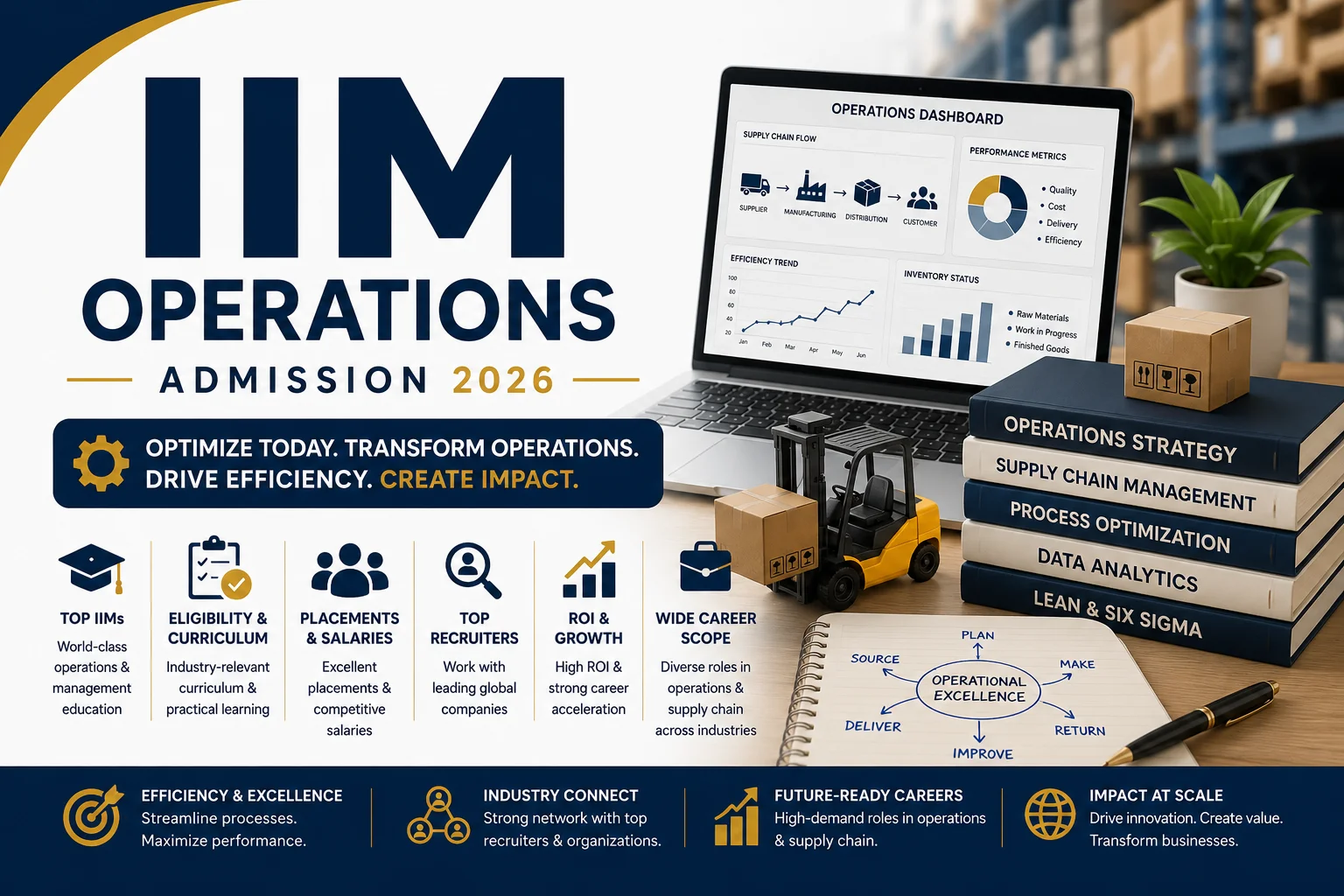



Choosing an MBA specialization is ultimately about choosing the kind of leader you want to become.
And for those who believe leadership means serving something greater than themselves, Defence Management remains one of the most respected and transformative journeys an IIM education can offer.
Explore the leading IIMs offering this PGP in Defence Management, and get a quick overview of their fees, eligibility, and reach to help you choose the right fit.



Leadership reveals itself during difficult moments. When answers are unclear. When pressure intensifies. When others seek reassurance. When responsibility cannot be delegated. Defence Management prepares individuals for those moments. It develops professionals capable of thinking clearly, acting decisively, and inspiring confidence during uncertainty. If you aspire to build a career grounded in service, resilience, discipline, and strategic excellence, the PGP in Defence Management could be the beginning of an extraordinary journey. Speak with our admission experts today, evaluate your profile, and discover which IIM ecosystem aligns with your aspirations. Because true leadership is not defined by power. It is defined by responsibility. And the willingness to carry it with integrity.
👋 Thinking about applying?
Our counsellors are here to help you pick the right programme. Drop us a query!