
IIMs Courses
India's MBA Discovery
Turn Ideas Into Impact and Dreams Into Enterprises.
Turn Ideas Into Impact and Dreams Into Enterprises.
For generations, success followed a familiar script.
For many people, that path still feels right.
But for a growing number of students, another question has started to emerge.
What if I want to build something of my own? What if I want to solve problems differently? What if I want to create jobs instead of only searching for one?
India is witnessing one of the most exciting entrepreneurial revolutions in its history. Startups are transforming industries. Young founders are challenging established businesses. Technology is creating opportunities that did not exist a decade ago.
Yet entrepreneurship is often misunderstood. Successful founders understand customers. They build teams. They manage finances. They adapt to uncertainty. They communicate vision. They execute relentlessly.
These are skills that can be nurtured.
The Post Graduate Programme in Innovation and Entrepreneurship is designed to help students develop exactly these capabilities. It prepares future founders, innovators, intrapreneurs, and business leaders to identify opportunities, solve meaningful problems, and build ventures that create lasting value.
Because entrepreneurship is not only about starting companies. It is about seeing possibilities where others see obstacles. And having the courage and capability to act on them.
Entrepreneurship education has evolved significantly. Years ago, aspiring founders often believed that business creation relied solely on instinct. You either had the entrepreneurial spark or you did not.
Modern entrepreneurship tells a different story.
The PGP in Innovation and Entrepreneurship combines business fundamentals with startup thinking. Students learn how to identify opportunities, validate ideas, build products and services that customers genuinely value, raise capital, manage teams, and scale responsibly.
The programme encourages experimentation. Failure is not viewed as something to fear. Instead, it becomes an opportunity for learning and refinement. This mindset often transforms the way students approach both professional and personal challenges.
One of the most compelling aspects of entrepreneurship education is versatility. Not every graduate becomes a founder. Many join startups. Others lead innovation initiatives within established organisations. Some work with venture capital firms. Others transform family businesses.
Students also gain exposure to extraordinary stories. They interact with founders who succeeded. Founders who failed. Investors who backed unconventional ideas. Mentors who navigated uncertainty.
These experiences remind students that entrepreneurship is rarely a straight line. It is a journey defined by persistence, adaptability, and belief.
More students today are actively choosing entrepreneurship. Not because it is easy. But because it is meaningful.
The curriculum balances management fundamentals with entrepreneurial thinking. Students build strong business foundations while developing innovation capabilities.
Students generally study:
Students explore areas such as:
Entrepreneurship cannot be learned through lectures alone. Students actively participate in:
Following the first year, students often pursue internships with:
For many students, internships clarify whether they prefer startup environments or established organisations.
Admission to entrepreneurship focused programmes remains competitive. Institutes seek candidates who demonstrate curiosity, initiative, leadership potential, and willingness to challenge assumptions.
| Criteria | Requirement |
|---|---|
| Educational Qualification | Candidates must possess a recognised bachelor's degree. General category applicants generally require a minimum of 50 percent marks. Reserved category applicants receive applicable relaxations. Students from all academic disciplines are eligible. |
| Entrance Examination | CAT remains the primary examination accepted by leading IIMs. Strong overall performance enhances the likelihood of progressing through selection stages. |
| Work Experience | Work experience is not mandatory. Fresh graduates are encouraged to apply. Relevant entrepreneurial exposure may strengthen applications. |
Admission decisions generally consider:
Institutes seek individuals capable of contributing actively to entrepreneurial ecosystems.
Home to NSRCEL, one of India's most respected startup incubators. Known for its vibrant entrepreneurial ecosystem and extensive mentor network.
Boasts a rich entrepreneurial legacy and exceptional alumni success stories.
Encourages innovation through entrepreneurship initiatives and student driven activities.
Increasingly recognised for fostering entrepreneurial thinking and startup engagement.
Emerging as a destination focused on innovation, creativity, and entrepreneurial leadership.
Students often compare these ecosystems based on mentorship access, incubation support, alumni networks, and alignment with their long term aspirations.
One of the biggest myths surrounding Entrepreneurship programmes is that every student who joins must eventually launch a startup. The reality is much broader.
Entrepreneurship education prepares individuals to think differently. It teaches them how to identify opportunities, solve problems creatively, navigate uncertainty, and take calculated risks. These capabilities are valuable whether someone becomes a founder, joins a startup, transforms a family business, works in venture capital, or drives innovation within large corporations.
In fact, some of the world's most successful organisations actively seek people with entrepreneurial mindsets. They want professionals who can challenge assumptions, build new initiatives, adapt quickly, and identify growth opportunities before others do.
Many graduates initially pursue corporate roles to gain experience before launching ventures. Others build startups immediately after graduation. Some return to family businesses and transform them using modern strategies.
The possibilities are diverse and exciting.
Founders identify opportunities, build teams, raise resources, and create products or services that address market needs. Responsibilities include vision setting, fundraising, business development, team building, customer acquisition, and product strategy.
Venture Capital professionals evaluate startup opportunities and support investment decisions. Responsibilities include market analysis, founder evaluation, due diligence, and portfolio support.
Innovation consultants help organisations develop new ideas and improve competitiveness.
Product Managers bridge customer needs, business goals, and execution.
Growth professionals focus on customer acquisition, retention, and business expansion.
These professionals lead innovation initiatives within established organisations.
Many students return to family enterprises with fresh perspectives and management expertise. Responsibilities may include expansion strategies, digital transformation, professionalisation, and succession planning.
Consultants support emerging ventures with business planning and execution.
Entrepreneurship education has evolved dramatically over the past decade. Earlier, entrepreneurship was often viewed as an unconventional path. Today, it is increasingly celebrated.
India's startup ecosystem continues to expand across sectors such as:
Corporate recruiters increasingly value entrepreneurial capabilities. Startups actively seek graduates capable of thriving in dynamic environments. Venture capital firms look for analytical thinkers who understand founders. Family businesses seek next generation leaders capable of driving transformation.
Graduates choosing corporate pathways generally secure compensation ranging from approximately ₹14 LPA to ₹30 LPA depending on the recruiter and role. Those pursuing entrepreneurship follow different journeys. Some ventures fail. Others pivot. A few achieve extraordinary success.
Entrepreneurship education prepares students to navigate all of these realities with resilience.
One of the strongest advantages of pursuing Entrepreneurship within leading IIM ecosystems is access.
These ecosystems often provide:
Students gain opportunities to transform ideas into tangible ventures. Even those who do not immediately launch businesses benefit from this exposure. They learn how innovation happens. They understand the realities of building organisations. And they become more confident in pursuing unconventional paths.
Entrepreneurship graduates engage with organisations across sectors.
Amazon, Google, Flipkart, Microsoft, and Infosys. These organisations increasingly value innovative thinking.
Deloitte, EY, KPMG, Accenture, and PwC. Consulting offers opportunities to solve business challenges across industries.
Early stage startups, growth stage ventures, scale up businesses, and technology enabled enterprises. Students often thrive in environments characterised by speed and experimentation.
Venture capital firms, angel investment networks, and startup accelerators. These environments provide exposure to innovation from the investor perspective.
Many graduates return to family enterprises and introduce professional management practices. This pathway remains especially relevant in the Indian business landscape.
For many students and families, the decision to pursue an MBA involves careful financial consideration. Entrepreneurship programmes are no different.
The total investment generally ranges between approximately ₹18 Lakhs and ₹25 Lakhs depending on the institute. The fee structure often includes:
Students may benefit from:
Exploring available options early can ease financial planning.
The return on investment extends beyond immediate salaries. Graduates gain access to:
For aspiring entrepreneurs, these intangible benefits often become invaluable. The right network, mentor, or conversation can sometimes change the trajectory of an entire venture.
Entrepreneurship education offers a truly distinctive experience.
Students learn how to create opportunities rather than waiting for them.
Interactions with entrepreneurs provide practical insights.
The curriculum encourages creativity and experimentation.
Graduates pursue corporate, startup, investment, and family business pathways.
Incubators and accelerators strengthen learning.
Students build confidence through action.
Projects and competitions simulate entrepreneurial realities.
Entrepreneurial thinking remains valuable regardless of industry.
I entered the programme with an idea and a lot of uncertainty. The ecosystem gave me mentors who challenged my assumptions and helped me build confidence in my vision.
I realised entrepreneurship is not only about launching startups. It is about approaching problems with curiosity and courage. That mindset transformed my career.
I wanted to contribute meaningfully to my family's business without relying solely on tradition. The programme gave me frameworks and confidence to introduce change thoughtfully.
These stories reflect an important truth. Entrepreneurship education does not create identical outcomes.
Instead, it helps individuals discover their own definitions of success.
This programme may be the right fit if you:
You do not need an existing startup idea.
You do not need entrepreneurial experience.
What matters most is curiosity, resilience, and a willingness to learn.
Students interested in Innovation and Entrepreneurship also explore:


Choosing an MBA specialisation is ultimately about choosing the kind of problems you want to solve.
And for those who dream not only of succeeding within the world as it exists, but also of building the world as it could be, Entrepreneurship remains one of the most exciting journeys an MBA can offer.
Explore the leading IIMs offering this Entrepreneurship programme, and get a quick overview of their fees, placements, rankings, and eligibility to help you choose the right fit.
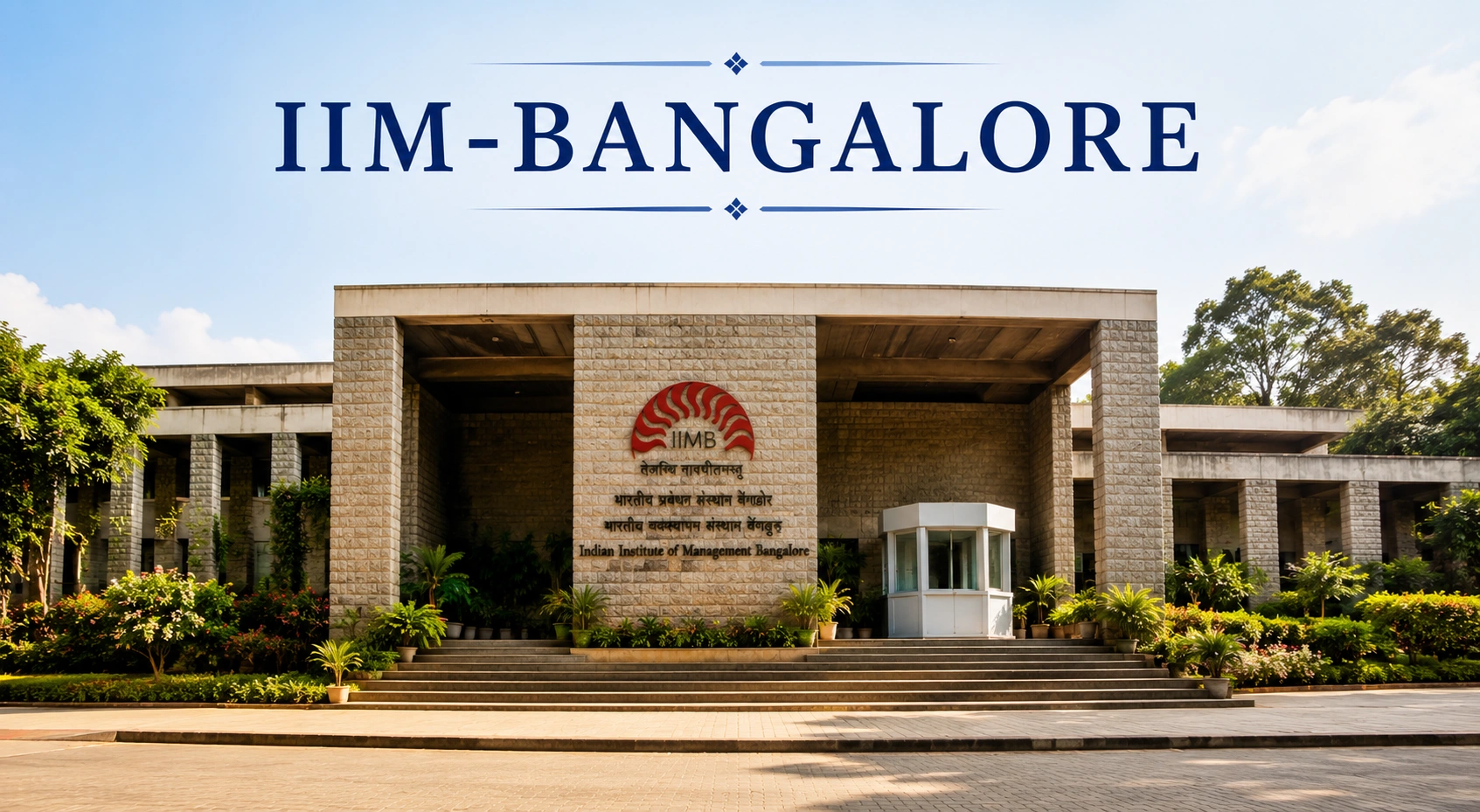




Every great business once began as an idea. An idea that someone believed in enough to pursue. Entrepreneurship is not reserved for a select few born with extraordinary confidence. It is a journey of experimentation, growth, adaptation, and resilience. If you dream of creating something meaningful, transforming industries, leading innovation, or redefining the future of your family business, the PGP in Innovation and Entrepreneurship can help you build the skills and mindset required to take that first step. Speak with our admission experts today, evaluate your profile, and discover which IIM ecosystem aligns with your aspirations.
👋 Thinking about applying?
Our counsellors are here to help you pick the right programme. Drop us a query!