
IIMs Courses
India's MBA Discovery
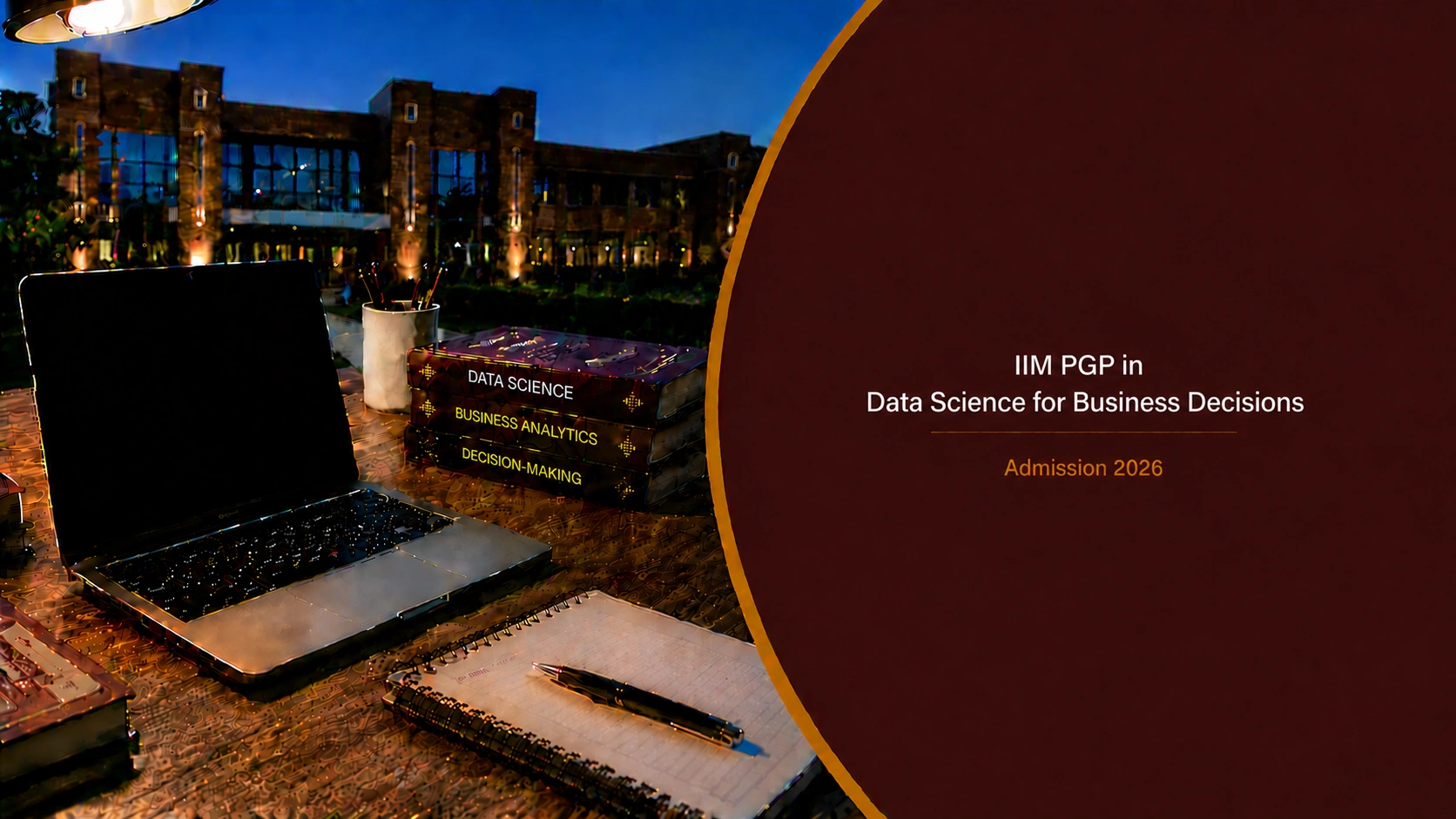
Transform Data into Decisions That Drive the Future.
Transform Data into Decisions That Drive the Future.
Every click on a website. Every online purchase. Every customer interaction. Every hospital admission. Every financial transaction. Every supply chain movement. Every social media engagement. Generates data.
The world has never produced more information than it does today. But data alone has little value. A spreadsheet cannot improve customer experiences. A dashboard cannot transform a business. An algorithm cannot create impact without direction.
What truly matters is the ability to interpret information and turn it into decisions. This is where Data Science for Business Decisions creates extraordinary value.
Organizations today do not simply seek professionals who can build models. They seek leaders who understand business contexts.
The PGP in Data Science for Business Decisions prepares participants to thrive within this evolving landscape. It combines analytical rigor with managerial thinking to help professionals leverage data responsibly and effectively.
Because in a world overflowing with information, those who can transform data into wisdom will shape the future.
Organizations today generate enormous volumes of data. Yet many struggle to convert information into actionable insights. The challenge is no longer access to data. The challenge is understanding what the data means.
What decisions should follow. And how organizations can create value responsibly. The PGP in Data Science for Business Decisions prepares participants to address these challenges.
Importantly, participants learn that successful data science professionals must balance technical expertise with business understanding. Models must align with objectives. Insights must support decisions. Recommendations must be practical.
Data science is not simply about algorithms. It is about impact.
One of the programme's greatest strengths lies in its interdisciplinary learning environment. Engineers strengthen business acumen. Managers deepen analytical capabilities. Consultants enhance decision-making frameworks. Entrepreneurs identify opportunities through insights. Business professionals build confidence with emerging technologies.
Because meaningful innovation occurs at the intersection of analytics and strategy.
Organizations increasingly depend on data to remain competitive. Professionals capable of translating analytics into action remain highly valuable.
The curriculum combines analytical foundations with business applications. Participants focus on practical implementation and strategic relevance.
Students generally explore:
Participants learn:
Students explore:
Participants examine:
Students strengthen capabilities related to:
Participants develop expertise in:
Data expertise develops through application. Participants engage through:
The emphasis remains practical, analytical, and business-focused.
The programme welcomes professionals from diverse backgrounds.
| Criteria | Requirement |
|---|---|
| Educational Qualification | Applicants should possess a recognised bachelor's degree. Academic requirements vary across institutions. |
| Professional Background | Participants often include engineers, business analysts, technology professionals, consultants, finance specialists, operations professionals, entrepreneurs, and managers. Candidates from other sectors with strong analytical interest may also be eligible. |
| Entrance Examination | CAT or GMAT scores are generally evaluated as part of the institute-specific selection process, along with personal interviews. |
Institutes generally evaluate:
The emphasis remains on identifying individuals capable of thriving in data-driven environments.
Known for analytical excellence and strong industry engagement.
Recognized for practical and contemporary management education.
Offers future-focused programmes emphasizing business relevance.
Known for innovation-driven learning experiences and analytical rigor.
Professionals often compare programmes based on curriculum depth, industry exposure, faculty expertise, alumni networks, placement outcomes, technological relevance, and alignment with long-term career aspirations.
Every modern organization generates data. But not every organization knows what to do with it.
The organizations that thrive in today's economy are not necessarily those with the most data. They are the ones that make the best decisions using it.
This growing reliance on evidence-based decision-making has transformed Data Science from a technical specialization into a strategic business capability. Professionals who can bridge analytics and business understanding have become indispensable.
The PGP in Data Science for Business Decisions prepares participants to thrive within this environment. Graduates emerge equipped to solve complex problems, influence decision-making, and generate value through insights.
Data Scientists uncover patterns and build predictive solutions. Responsibilities include data exploration, model development, predictive analytics, feature engineering, experimentation, and business problem-solving.
Analytics Managers translate insights into business outcomes. Responsibilities include decision support, performance reporting, stakeholder communication, analytics planning, cross-functional coordination, and strategic recommendations.
Decision Scientists strengthen organizational judgement. Responsibilities include decision modelling, scenario analysis, experiment design, optimization initiatives, insight generation, and executive communication.
Machine Learning professionals develop intelligent solutions. Responsibilities include algorithm development, model training, validation, deployment support, performance monitoring, and continuous improvement.
Consultants advise organizations on leveraging data effectively. Responsibilities include business assessments, analytics strategy, transformation initiatives, stakeholder workshops, capability building, and executive recommendations.
Product analysts improve digital experiences. Responsibilities include user behaviour analysis, experimentation, growth evaluations, retention initiatives, performance optimization, and roadmap recommendations.
Strategy professionals shape enterprise analytics capabilities. Responsibilities include data roadmaps, capability assessments, governance planning, investment evaluations, stakeholder alignment, and transformation leadership.
BI leaders improve organizational visibility. Responsibilities include dashboard oversight, reporting frameworks, insight communication, performance evaluations, decision support, and team leadership.
Data Science continues to influence nearly every industry. Organizations increasingly seek professionals capable of combining analytical depth with business understanding.
As a result, the ability to derive meaningful insights from data has emerged as a critical competitive advantage. Participants pursuing Data Science for Business Decisions often seek one of three outcomes: transitioning into dedicated analytics roles, strengthening decision-making capabilities within existing careers, or pursuing leadership opportunities in data-driven organizations.
Many graduates report promotions into strategic positions, expanded cross-functional responsibilities, greater executive exposure, enhanced analytical confidence, improved compensation, and broader professional networks.
Career progression and salary growth frequently range between 25 percent and 60 percent over time depending on experience, specialization, and organizational opportunities. For many professionals, the programme becomes a gateway into some of the most future-ready careers available today.
Data Science capabilities remain valuable across industries.
Google, Microsoft, Amazon, IBM, Oracle, and Adobe. Technology leaders continue investing heavily in analytics talent.
Infosys, TCS, Wipro, HCL Technologies, Tech Mahindra, and Persistent Systems. Digital transformation drives demand.
Deloitte, Accenture, EY, PwC, KPMG, and Capgemini. Analytics consulting continues expanding rapidly.
HDFC Bank, ICICI Bank, Axis Bank, Kotak Mahindra Bank, and American Express. Fraud detection and customer intelligence remain priorities.
Flipkart, Amazon India, Myntra, Swiggy, Zomato, and Meesho. Customer insights influence growth.
Apollo Hospitals, Dr. Reddy's Laboratories, Cipla, Fortis Healthcare, and Sun Pharma. Healthcare analytics improves outcomes.
Compensation within Data Science depends on professional experience, technical expertise, industry specialization, leadership responsibilities, geographic location, and business impact.
In addition to fixed compensation, many professionals receive performance bonuses, retention incentives, ESOPs, and long-term rewards.
The combination of demand, versatility, and business impact makes analytics careers highly attractive.
Data Science education represents an investment in future relevance. Participants strengthen capabilities increasingly valued across industries.
The fee structure generally includes:
Participants may explore:
Many institutions and organizations actively support analytics education.
Return on investment extends beyond salary growth. Participants gain:
For many professionals, the greatest return lies in becoming indispensable contributors within increasingly data-driven organizations.
Data Science for Business Decisions remains one of the most impactful and future-proof specializations available today.
Translate insights into action.
Strengthen judgement using evidence.
Understand modern analytical capabilities.
Communicate insights effectively.
Technology, consulting, banking, healthcare, and consumer sectors.
Enhance professional visibility and credibility.
Apply concepts through projects and simulations.
Influence strategic decisions with confidence.
The programme helped me move beyond reporting and start influencing decisions through insights.
I learned how to connect machine learning concepts with real business outcomes.
The analytical frameworks strengthened my confidence in making evidence-based recommendations.
These experiences reveal an important truth.
Data does not replace judgement. It enhances it.
This programme may be an excellent fit if you:
Professionals from technology, consulting, finance, operations, healthcare, marketing, and entrepreneurial backgrounds frequently thrive in this specialization.
Students interested in Data Science for Business Decisions also explore:


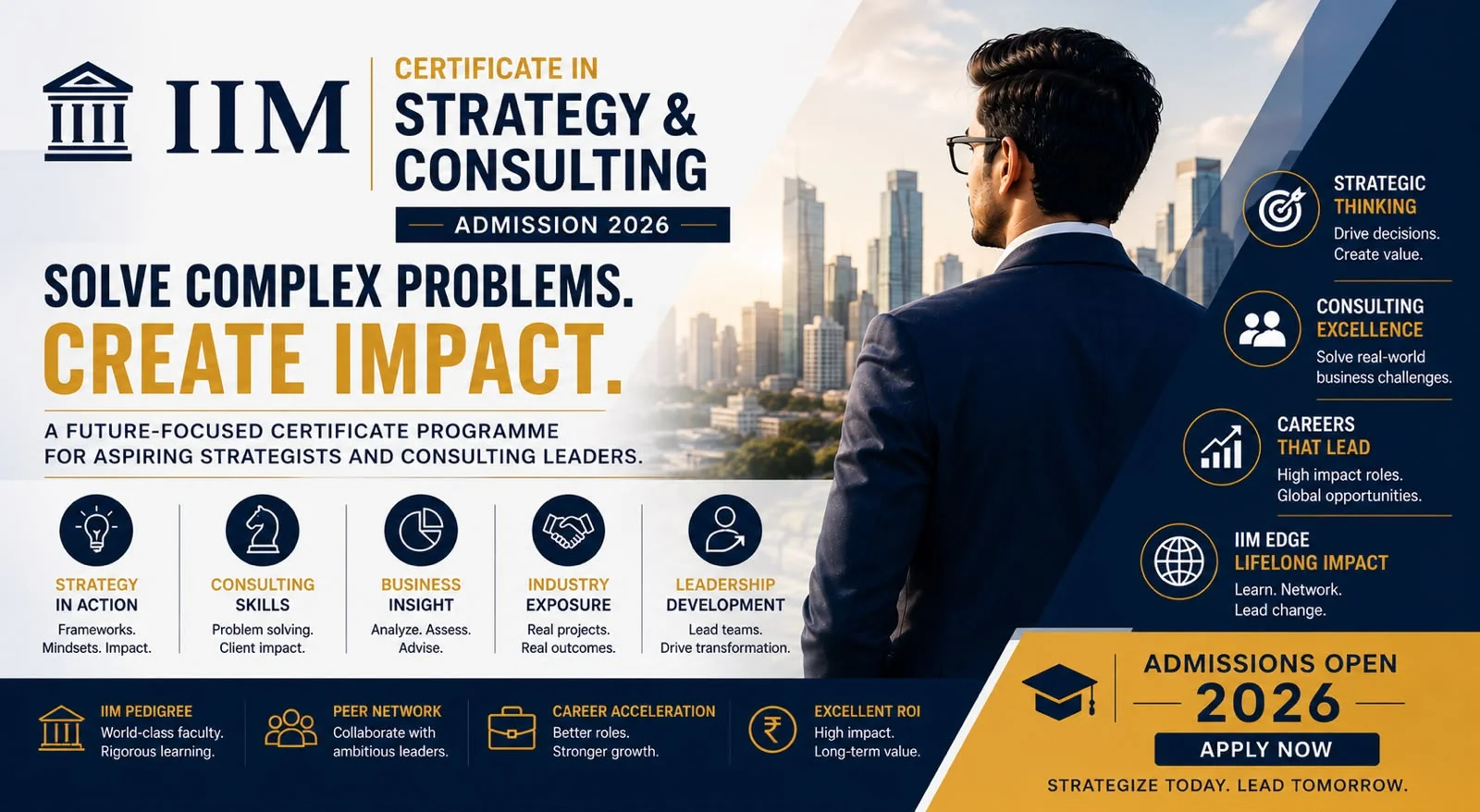
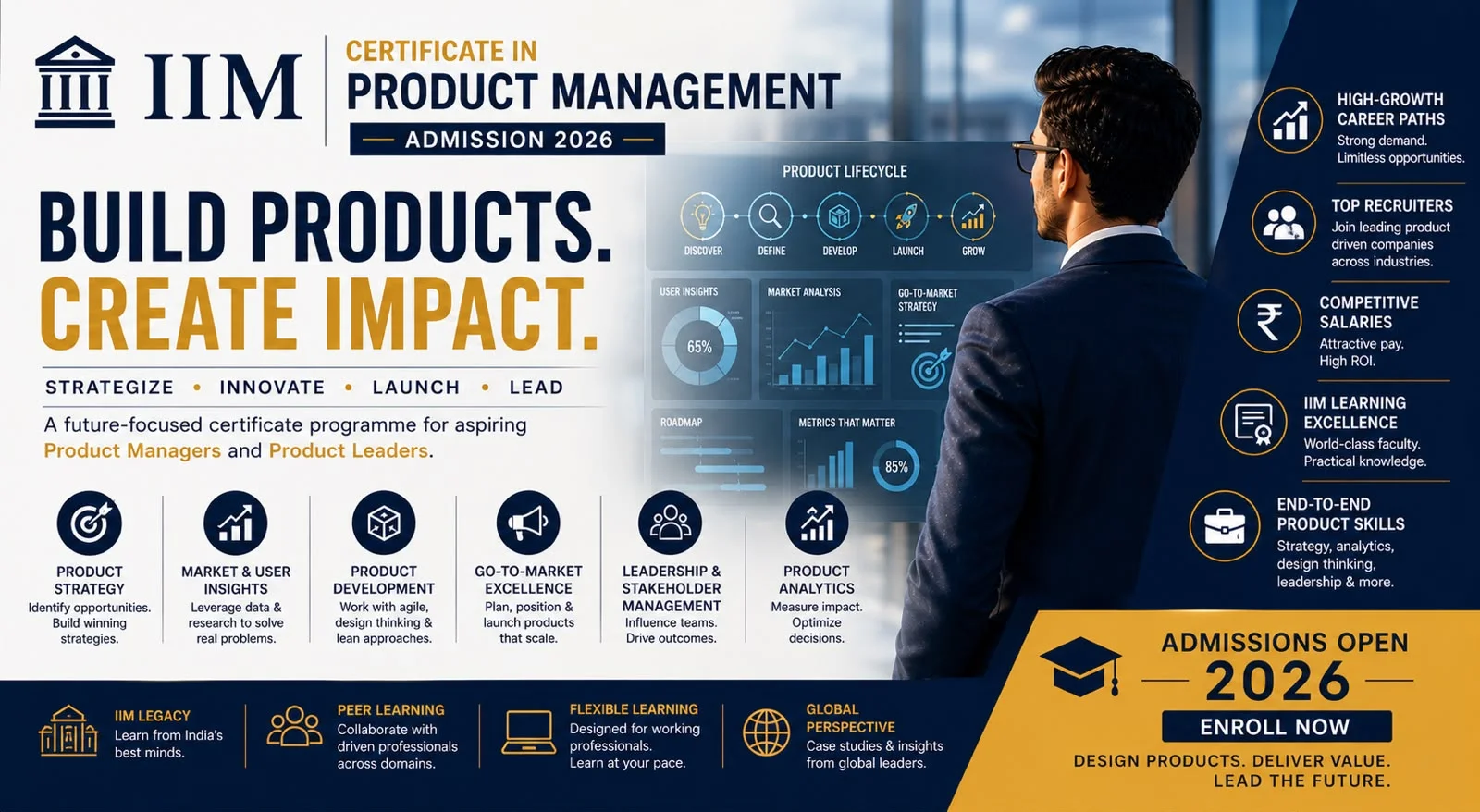

Choosing executive education is ultimately about choosing the capabilities that will define the future.
And for those who believe that data should guide smarter decisions, Data Science for Business Decisions remains one of the most powerful journeys an IIM education can offer.
Explore the leading IIMs offering this Data Science for Business Decisions programme, and get a quick overview of their fees, placements, rankings, and eligibility to help you choose the right fit.




The future will generate more data than ever before. But the organizations that succeed will not be those with the largest databases. They will be the ones with leaders capable of transforming information into meaningful action. The PGP in Data Science for Business Decisions prepares participants to become those leaders. It transforms numbers into narratives, patterns into possibilities, and insights into innovation. Speak with our admission experts today, evaluate your profile, and discover which IIM programme aligns with your aspirations.
👋 Thinking about applying?
Our counsellors are here to help you pick the right programme. Drop us a query!